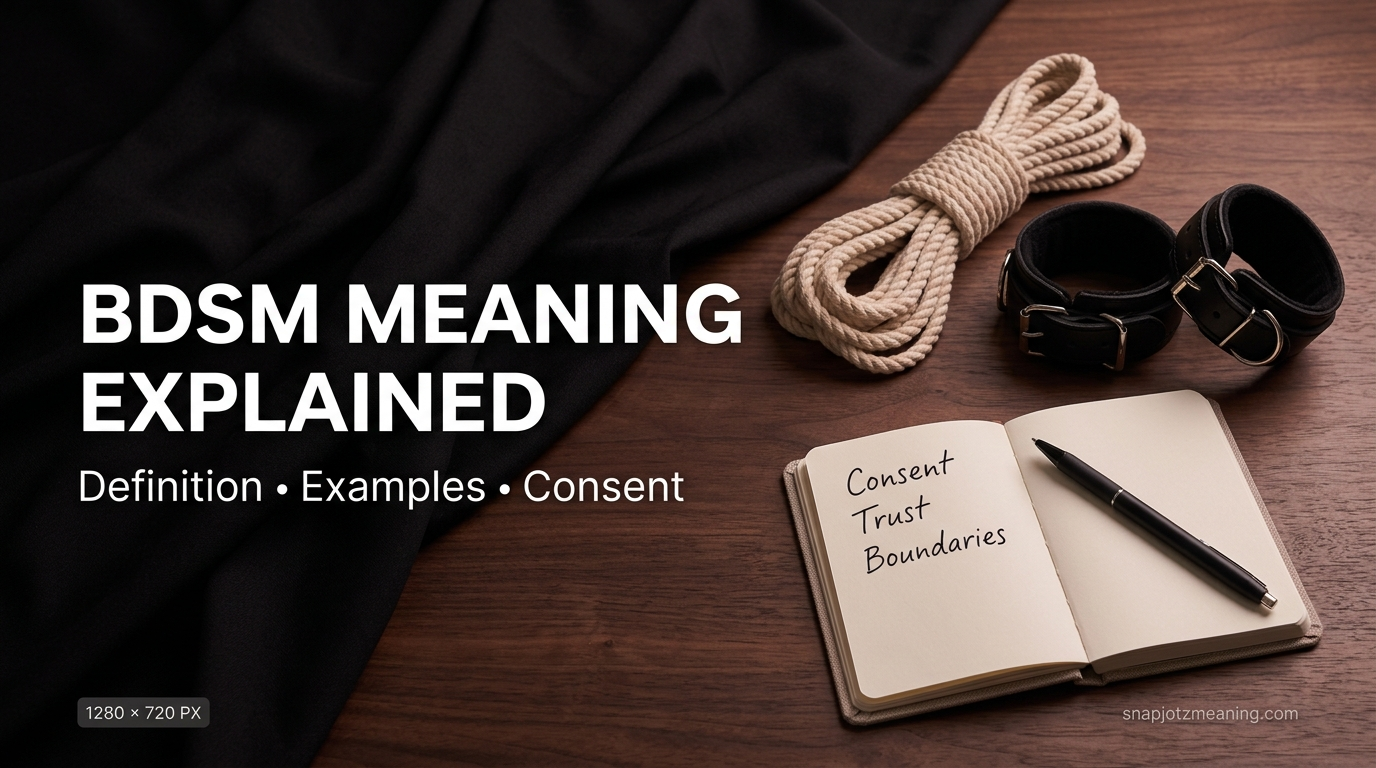
What is BDSM Meaning? It is consensual play that uses power, control, restraint and strong sensation. The letters stand for bondage and discipline, dominance and submission, and sadism and masochism.
BDSM is for adults only. It works only when everyone agrees. Many people also search “BDM” or “BDMs” by mistake. This guide covers both spellings.
You will learn what BDSM in a relationship, BDSM in chat and powerplay in the bedroom really mean. You will also learn the basic safety rules, in simple words.
Table of Contents
What Does BDSM Stand For?
What does BDSM stand for? It is a mix of three pairs of terms. Each pair covers a different part of the practice.
Bondage and discipline (BD): Bondage means restraint. Think of ropes, cuffs or ties that limit movement. Discipline means agreed rules and agreed “punishments.”
Dominance and submission (D/s): One person takes control. The other person gives control. This is mostly about the mind, not the body.
Sadism and masochism (SM): Sadism is enjoying giving strong sensation. Masochism is enjoying receiving it. Both happen only with consent.
The word is fairly new. One major dictionary dates its first known use to 1991. Wikipedia traces it to a 1991 Usenet post.
What does BD mean for a girl? It means the same thing as it does for anyone: bondage and discipline. BDSM roles are not tied to gender. A girl can be a dom, a sub or a switch.
In casual texts, BD can also mean “birthday” or “big deal.” Check the context. In BDSM, it always means bondage and discipline.
What does BDM stand for? In most searches about this topic, people mean BDSM. Outside this topic, BDM often means “business development manager.” Do not mix the two up.
One more point: BDSM is not all about pain. Medical sources say it does not have to involve pain at all. Many people care more about trust, power and connection.

What Is BDSM Meaning in a Relationship?
What is BDSM in a relationship? It means both partners agree to share power, control or strong sensation. They plan it ahead. They can stop at any time.
Here are the common roles:
- Dominant (dom): the partner who leads and sets the structure. The dom is also responsible for the other person’s safety.
- Submissive (sub): the partner who follows and gives up control by choice.
- Switch: a person who enjoys both roles.
Some couples take it further. A master/slave dynamic is a stronger form of dominance and submission. Many people see it as part of who they are, not just a game.
How do couples start? Some add it to an existing relationship. Others look for partners who already share the interest. Either way, the first step is a calm talk. Share what you are curious about. Share what is off limits.
BDSM is also more common than many people think. Research suggests about 20% of people have tried some form of it. About 50% have fantasized about it. In the U.S., one study estimated 1 in 10 people have tried BDSM for pleasure.
Can it help a relationship? For many couples, yes. People report more trust, better talk about sex and less stress. Studies also find an increase in the bonding hormone oxytocin.
Is BDSM healthy or abuse? The difference is consent. Healthy BDSM has clear agreements, safe words and respect for limits. Abuse has pressure, fear or ignored limits.
Watch for these warning signs:
- Your partner ignores a safe word or a “no.”
- You feel pressured to try something.
- Control continues outside what you agreed to.
- You feel afraid, not safe.
If you see these signs, step away and talk to someone you trust. Abuse can happen in any kind of relationship.
Is BDSM a mental health problem? No. Studies have found no link between consensual BDSM and mental illness. The DSM-5 separates a sexual interest from a disorder. It becomes a concern only if it causes deep distress or harms someone who has not agreed.
If you want support, look for a kink-aware therapist. That is someone who knows the terms and treats you without judgment. Ask about their experience before you book.

What Is Powerplay in the Bedroom?
What is powerplay in the bedroom? It is a way to play with control. One partner leads. The other follows. It can be as light as a blindfold or role play.
What is BDSM in bed? It is the same idea in a private, sexual setting. But sex is not required. BDSM acts can happen with no sex at all.
Here are some “light” BDSM ideas for beginners:
- Soft cuffs or a scarf
- Blindfolds
- Role play
- Light spanking
- Hot and cold sensation play
- Giving and following simple orders
Experts often say to start small and slow. Pick one or two things. Talk about them first. See how it feels. Then decide what to try next.
Is powerplay the same as rough sex? No. Both can look similar. But BDSM has more built-in rules. Partners talk first, set limits and agree on a stop signal. A sexuality expert explains that the community built these rules over many years so that everyone stays safe and consenting.
Here are the safety basics:
Use a safe word. This is an agreed word that stops everything right away. Pick a word you would not say in play. “No” and “stop” can be part of a game, so they often do not work as safe words.
Use the traffic light system. Green means keep going. Yellow means slow down. Red means stop now.
Use a safe gesture. If speech is blocked, you need another signal. A dropped ball or a tapped hand works well.
Stay sober. Drugs and alcohol make it hard to read limits. Most serious BDSM injuries involve substance use.
Never leave a bound partner alone. The free partner must stay in the room. Never restrict breathing. It is one of the riskiest acts.
Plan aftercare. After a scene, partners calm down together. Aftercare can be cuddling, water, food or a quiet talk. Some people feel low after a scene. This is often called “bottom drop.” Aftercare helps.
Laws also vary. BDSM is not a crime in the U.S., and the key is consent between adults. But if someone is hurt, charges are possible. Keep play within what you both agreed to. To learn more, the National Coalition for Sexual Freedom shares safety guidelines.
What Does BDSM Mean in Chat?
What is BDSM in chat? It is the use of kink words and role talk in texts, DMs or online groups. It can be flirty. It can be a way to plan or talk about limits before meeting.
You may see words like these:
- Dom: the person who leads
- Sub: the person who follows
- Switch: someone who enjoys both
- Scene: a planned BDSM session
- Play: a short name for BDSM activity
- Kink: a wide word for non-standard desires
- Vanilla: sex without BDSM
Many people first learn about BDSM online. Communities, forums and social apps help people find others with the same interests. Some also host local meetups, often called munches, where people talk with no play.
Chat has risks too. Here is how to stay safe:
- Set limits before you talk about acts.
- Never pressure anyone to say or do anything.
- Do not share private photos with someone you do not trust.
- Keep adults only. Never use BDSM talk with a minor.
- Stop right away if someone says no or goes quiet.
- Meet new people in a public place first.
Remember that chat roleplay is not the same as real consent. Words in a text are not a contract. Talk again before you try anything in person. Check in often, and respect a stop signal.
Understanding BDMS can sometimes lead to questions about other words that describe personality, behavior, or social interactions. Exploring the meaning of “naive” in everyday language can help readers better understand how people’s attitudes and actions are described in different contexts.
Make the connection between BDSM and contingent clearer
FAQs
What does BDSM stand for?
BDSM stands for bondage and discipline, dominance and submission, and sadism and masochism. It is a mix of three pairs of terms. One major dictionary dates its first known use to 1991. Many people also type “BDMs” by mistake.
What is BDSM in a relationship?
BDSM in a relationship means both partners agree to share power, control or strong sensation. One partner may lead (dom) and the other may follow (sub). Some couples switch roles. It works best with open talk, clear limits and a safe word. Research links it to more trust and less stress.
What is BDSM in chat?
BDSM in chat means using kink words in texts, DMs or online groups. You may see dom, sub, switch, scene or play. Keep chat safe. Set limits first, never pressure anyone, and stop right away if someone says no. Consent matters online just as much as in person.
What is powerplay in the bedroom?
Powerplay in the bedroom is a way to play with control. One partner leads and the other follows. It can be light, like blindfolds, role play or light spanking. Sex is optional. It is not the same as rough sex, because partners plan it first and use a safe word.
What does BD mean for a girl?
BD stands for bondage and discipline. It does not change by gender. A girl can be a dom, a sub or a switch, just like anyone else. In casual texts, BD can also mean “birthday” or “big deal,” so check the context. In BDSM, it always means bondage and discipline.
Is BDSM a mental health problem?
No. Studies have found no link between consensual BDSM and mental illness. The DSM-5 separates a sexual interest from a disorder. It becomes a problem only if it causes deep distress or harms someone who has not agreed. If you want support, look for a kink-aware therapist.
conclusion
BDSM is a wide idea, not one single act. It can be a short game or a way of life. It can be sexual or not. What never changes is consent.
Whether you search for BDSM in a relationship, BDSM in chat or powerplay in the bedroom, the same rules apply. Talk first. Set clear limits. Pick a safe word. Check in often, and stop right away when someone says stop.
If you are curious, start with a calm talk and go slow. If you need guidance, a kink-aware therapist can help you sort it out.

Abroy Ahad is a word-meaning and language enthusiast dedicated to making confusing words, phrases, slang, and everyday expressions easier to understand. Through SnapJotzMeaning.com, he creates clear, simple, and practical explanations that help readers quickly discover what words mean and how they are commonly used.