Memento mori meaning is simple. It is Latin for “remember you must die.” It reminds us that life is short.
The idea is old, and it is not gloomy. People have used it for centuries to focus on what matters. This guide covers the definition, the history, the Bible link, and how to use it daily.
Table of Contents
What Does Memento Mori Mean? Definition, Latin Roots, and Pronunciation
What does memento mori mean? It means “remember that you must die.” It is a reminder of mortality.

The phrase has two parts. Memento is a command that means “remember.” Mori means “to die.” Put together, the literal meaning is “you must remember to die”.
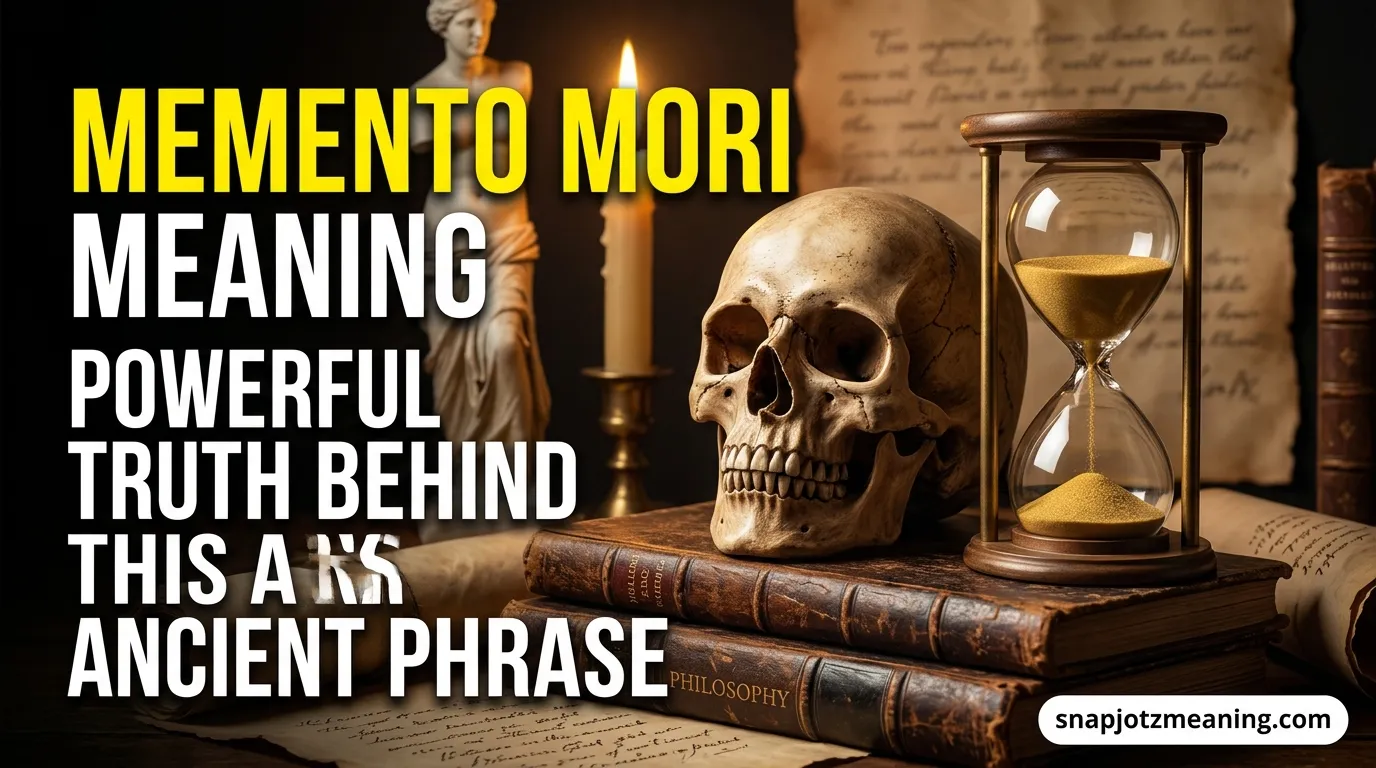
It also works as a noun. A memento mori is an object that reminds people of death. A skull is the best-known example, and dictionaries list both senses.
How do you say memento mori? In English, it sounds like mə-MEN-toh MOR-ee.
The phrase was first recorded in the late 1500s. One major dictionary dates it to 1598. The plural stays the same: memento mori.
Watch the spelling. It is “memento,” not “momento.” Many people mix them up.
Today, the phrase shows up in art, jewelry, tattoos, and film. The movie 28 Years Later uses it for a monument of skulls built to honor the dead.
Memento Mori History and Symbols: From the Stoics to the Bible
The history of memento mori starts long before the Latin phrase. Socrates said real philosophy is about dying and being dead. Democritus even spent time among tombs.

The Stoics made it a daily habit. Seneca wrote often about death. Epictetus told students to remember that loved ones are mortal. Marcus Aurelius wrote that a person could leave life at any moment, so each act should count. You can read that line in Meditations 2.11.
Rome had its own version. During a Roman triumph, a servant stood behind the victorious general. He reminded the general that he was only human. That kept pride in check on the proudest day of the man’s life.
In Rome, you can still see a plaque that says Hodie mihi, cras tibi. It means “my turn today, your turn tomorrow.”
Is memento mori in the Bible? The exact Latin phrase is not in the Bible. The idea is. Psalm 90:12 asks God to teach us to “number our days.” Ecclesiastes 7:2 says the living should take the end of life to heart. Genesis 3:19 says people are dust and return to dust.
That last line lives on in Ash Wednesday. Ashes are placed on the forehead with words about dust. A Latin line from Sirach, often tied to memento mori, says to remember your last end and you will not sin.
Over time, the idea turned into art:
- Vanitas paintings show skulls, hourglasses, candles, and wilting flowers.
- Philippe de Champaigne painted a tulip for life, a skull for death, and an hourglass for time, as Daily Stoic notes.
- Danse Macabre showed Death leading kings and peasants alike. It grew in the years after the plague began to spread in the 1340s.
- Mourning rings and skull watches were worn in the 1500s and 1600s. Mary, Queen of Scots, owned a skull-shaped watch.
- Bone chapels, like Capela dos Ossos in Portugal, cover walls with human bones.
- Hans Holbein’s The Ambassadors hides a stretched skull at the bottom of the painting.
- Shakespeare’s Yorick in Hamlet is a skull used to make the same point.
The idea is global too. Buddhists practice maraṇasati, which means awareness of death. The Japanese Hagakure speaks of living with death in mind. Islamic teaching has tadhkirat al-mawt, the remembrance of death. The Norse Hávamál says friends and kin die, but a good name lives on.
In America, Puritan gravestones often show winged skulls. In Mexico, the Day of the Dead uses sugar skulls and playful poems called calaveras.
Understanding the deeper meaning of Memento Mori reminds us to appreciate life, creativity, and the beauty of the present moment. Just as ancient phrases carry powerful messages, artistic terms like gouache painting reveal another fascinating world of creativity, color, and expression.
Is Memento Mori Positive? Is It Evil? And What Is Its Opposite?
Is memento mori positive? Yes, when it is used well. The Stoics treated it as a tool for priorities, humility, and gratitude. Facing the end helps people drop trivial things.
Steve Jobs said at Stanford in 2005 that remembering death helped him make big choices. Fear and pride, he said, fall away in its presence.
Is memento mori evil? No. It did not begin as occult or dark. It grew out of Stoic philosophy and Christian teaching. Skulls look scary, so people link them to dark themes. But their original job was to teach humility and to urge a better life.
What is the opposite of memento mori? There are two answers.
- Denial of death. This is acting as if life has no end.
- Pure pleasure-seeking. The old Latin saying nunc est bibendum, “now is the time to drink,” took the opposite view. Christian writers set memento mori against it.
Some people use memento vivere, “remember to live,” as the modern flip side. Others pair it with carpe diem, “seize the day.” That is a partner, not an enemy. Memento mori says time is limited. Carpe diem says use it well.
The practice can go wrong. Brooding can cause dread. “Nothing matters” thinking can lead to nihilism. And “you only live once” can push people into reckless choices. If thoughts about death feel heavy, talk with someone you trust or a mental health professional.
How to Practice Memento Mori in Daily Life
You do not need a skull on your desk. A short habit is enough. Keep it brief, and end with action.
Ask a morning question. Jobs looked in the mirror each day and asked if he would want to do today’s plans if it were his last day. If the answer is no for many days in a row, something needs to change.
Use a visible cue. Try a coin in your pocket or a sticky note on your screen. A life-in-weeks calendar works too. An 80-year life is about 4,160 weeks. Seeing the boxes makes time feel real.
Do a short evening review. Seneca suggested closing each day as if it were complete. Ask if you spent today on purpose. Then let it go.
Reach out to people you love. Epictetus pointed out that loved ones are mortal too. That can make you more patient and more present. Make the call you have been putting off.
Move one delayed task forward. Pick one thing you keep postponing. Schedule the first step today.
Think of amor fati, “love of fate,” as a close cousin. It asks you to accept what happens and use it. Memento mori asks you to value the time you have.
FAQ’s
What does memento mori mean?
It is Latin for “remember you must die.” It reminds people that life is short and that death comes to everyone. Its purpose is to help you focus on what matters, not to cause fear.
Is memento mori positive?
Yes, in most cases. The Stoics used it to build humility, gratitude, and purpose. It becomes harmful only when it leads to endless dread or reckless choices.
What is the opposite of memento mori?
The opposite is denying death or chasing pleasure with no thought of the end. An old Latin saying, nunc est bibendum, “now is the time to drink,” took that view. Carpe diem is a partner idea, not its opposite.
Is memento mori in the Bible?
The Latin phrase is not in the Bible. The idea is. Psalm 90:12, Ecclesiastes 7:2, and Genesis 3:19 all call people to remember how brief life is. Ash Wednesday also echoes this theme.
Is memento mori evil?
No. It comes from Stoic philosophy and Christian tradition. Skull imagery can look dark, but its original purpose was to teach humility and encourage wise living.
What name was mentioned 7000 times in the Bible?
It is God’s name, written as YHWH and often shown as “the LORD.” It appears about 6,800 times in the Hebrew Bible, so many people round it to 7,000.
conclusion
Memento mori is not about fear. It is a calm reminder that time is limited. Use it to cut the trivial, speak kindly, and start what matters.
Try one morning question tomorrow, and see what changes.
This is the same closing that sits at the end of the file, so you can paste it as is. If you want a different version, tell me the tone and length.

Abroy Ahad is a word-meaning and language enthusiast dedicated to making confusing words, phrases, slang, and everyday expressions easier to understand. Through SnapJotzMeaning.com, he creates clear, simple, and practical explanations that help readers quickly discover what words mean and how they are commonly used.