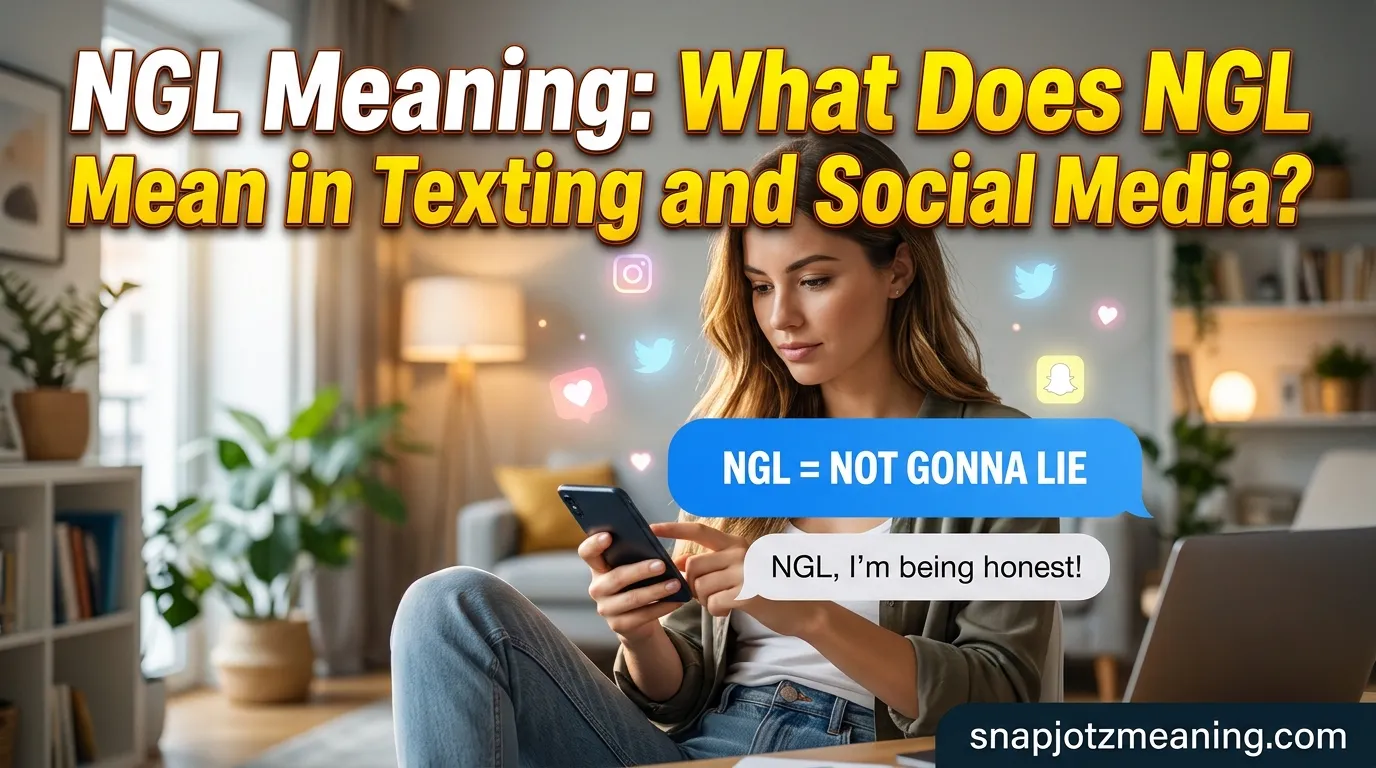
NGL meaning “not gonna lie.” People type it before an honest thought, like “ngl, that pizza was perfect.”
You may also see NGL as the name of an anonymous messaging app. This guide covers both: the NGL slang meaning, how Gen Z uses it, what it means from a girl, how to reply, and whether the app reveals your name.
Table of Contents
What Does NGL Mean in Slang?
What does NGL mean in slang? It is short for “not gonna lie.” It works like “to be honest” or “honestly.” Major English dictionaries list it as an informal abbreviation.
People use NGL in text in three main ways:
- To share a blunt opinion: “Ngl, that haircut looks off.”
- To admit something awkward: “Ngl, I stayed in bed all day.”
- To stress a real compliment: “Ngl, your art is amazing.”
It softens the message. The reader knows an honest take is coming.
You can put it at the start or the end of a sentence. Some people add “tho” for emphasis, like “ngl tho.” Related texting abbreviations include TBH, FR, lowkey, and no cap.
Keep NGL for DMs, group chats, Instagram, and TikTok. Skip it in work emails, essays, and job applications. Write “honestly” there instead.
One more thing: in the energy industry, NGL means natural gas liquids. The context tells you which meaning is in play.
Is NGL Gen Z Slang?
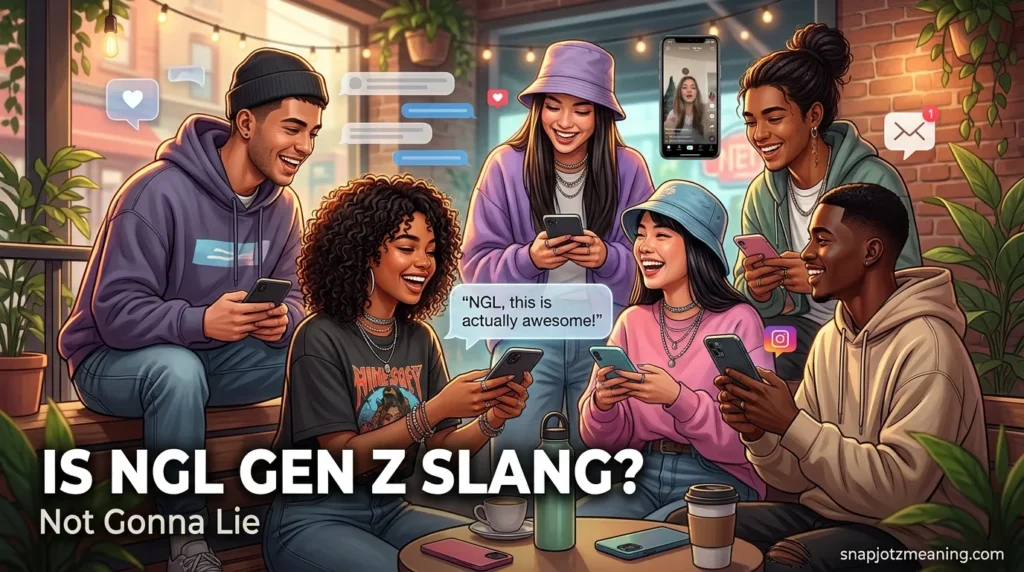
Is NGL Gen Z slang? Gen Z made it popular, but the phrase is older. Urban Dictionary logged “ngl” on its own in January 2009.
It then spread across social media platforms. The launch of the NGL app in 2021 pushed the term into everyday talk.
Today, people of many ages use it. Millennials and older adults text it too.
What Does NGL Mean From a Girl?
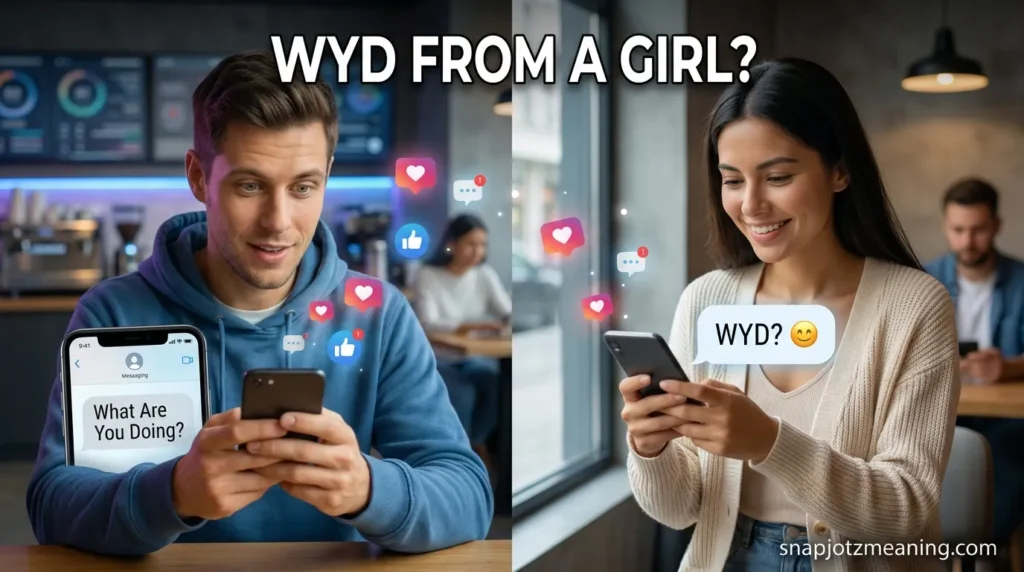
What does NGL mean from a girl? It means the same as it does from anyone: an honest statement is coming. The sender’s gender does not change the NGL meaning.
Context does. Look at what follows the word:
- “Ngl, I miss talking to you.” This is a vulnerable confession.
- “Ngl, that outfit isn’t it.” This is a softened criticism.
- “Ngl, I’m so tired.” This is casual friend talk.
Emojis, timing, and the rest of the chat also help. Still, NGL alone does not prove romantic interest. It can simply lower the pressure of saying something real.
How Do I Reply to NGL?
How do I reply to NGL? Answer the message that comes after it. You do not need to answer the abbreviation itself.
Here are simple NGL replies for common cases:
- Compliment: “Ngl, you crushed that talk.” Reply: “Thanks! That means a lot.”
- Criticism: “Ngl, the intro was long.” Reply: “Fair point. I’ll trim it.”
- Confession: “Ngl, I was nervous.” Reply: “I get it. Thanks for telling me.”
- Flirty: “Ngl, I like hanging out with you.” Reply: “Same here. Let’s do it again.”
A quick “ngl, same” also works when you feel the same way. Avoid getting defensive or writing a long explanation. Short and kind wins.
While NGL is commonly used to express honesty or share genuine opinions in online conversations, Gen Z slang is full of other popular expressions that add personality to everyday chats. One such trending term is bussin, which people often use to describe something exceptionally delicious, exciting, or impressive.
Is the NGL App Real, and Does NGL Reveal Your Name?
Is NGL fake or real? The slang is real, and so is the app. NGL Labs launched it in November 2021 in Venice Beach, California. Founders Raj Vir and João Figueiredo built it.
The app makes a link you share on Instagram Stories or Snapchat. Followers click it and send you an anonymous message. By June 2022, it was the most downloaded app on Apple’s US App Store.
There is a catch. In July 2024, the Federal Trade Commission and the Los Angeles District Attorney reached a settlement with NGL. CNN reported that the FTC said the company sent fake messages, such as “I’ve had a crush on you for years,” to push paid subscriptions. NGL agreed to pay $5 million and to block users under 18. In December 2025, Mode Mobile acquired the app.
Does NGL reveal your name? Not by default. Senders stay anonymous. The paid NGL Pro plan promised to unmask senders but gave only vague hints, like a rough location or phone type. It never gave a name, and the FTC called that deceptive.
Safety matters too. NBC News tests found that harsh phrases like “everyone hates you” got past the app’s filters. Anonymous apps can invite cyberbullying, so parents should talk with teens about them.
In short, NGL means “not gonna lie.” Use it in casual chats, reply to the message behind it, and be careful with the anonymous app.
Here are FAQs for the blog, written as short, snippet-ready answers.
FAQs
What does NGL mean in slang?
NGL means “not gonna lie.” People use it before an honest opinion, a confession, or a compliment. It works like “to be honest.”
What does NGL stand for in text?
In text, NGL stands for “not gonna lie.” In the energy industry, the same letters mean “natural gas liquids.”
Is NGL Gen Z slang?
Gen Z made it popular, but it is older than that. Urban Dictionary listed “ngl” on its own in January 2009. People of many ages use it now.
What does NGL mean from a girl?
It means the same as from anyone: an honest statement is coming. The words after NGL show the tone, whether it’s a confession, a soft criticism, or casual talk.
How do I reply to NGL?
Reply to the message that follows it. For a compliment, say “Thanks, that means a lot.” For criticism, try “Fair point.” For a confession, try “I get it. Thanks for telling me.”
Is NGL fake or real?
Both the slang and the app are real. NGL Labs launched the app in November 2021. In July 2024, the FTC said the company used fake messages to push paid subscriptions.
Conclusion
NGL means “not gonna lie.” It signals that an honest thought is coming, whether that’s a compliment, a confession, or a blunt opinion. Use it in casual chats, and reply to the message behind it. Keep it out of formal writing. The NGL app is a separate thing, so be careful with anonymous messages, especially for teens.

Abroy Ahad is a word-meaning and language enthusiast dedicated to making confusing words, phrases, slang, and everyday expressions easier to understand. Through SnapJotzMeaning.com, he creates clear, simple, and practical explanations that help readers quickly discover what words mean and how they are commonly used.